Start with site risks, not camera count
Walk the site and list the points that need evidence or live visibility. Typical priorities include public entrances, cash counters, loading points, stock rooms and the route between them. A camera plan is stronger when every camera has a defined purpose.
Do not use a camera to compensate for poor lighting, an obstructed view or an unprotected recorder location. Solve those conditions in the plan.
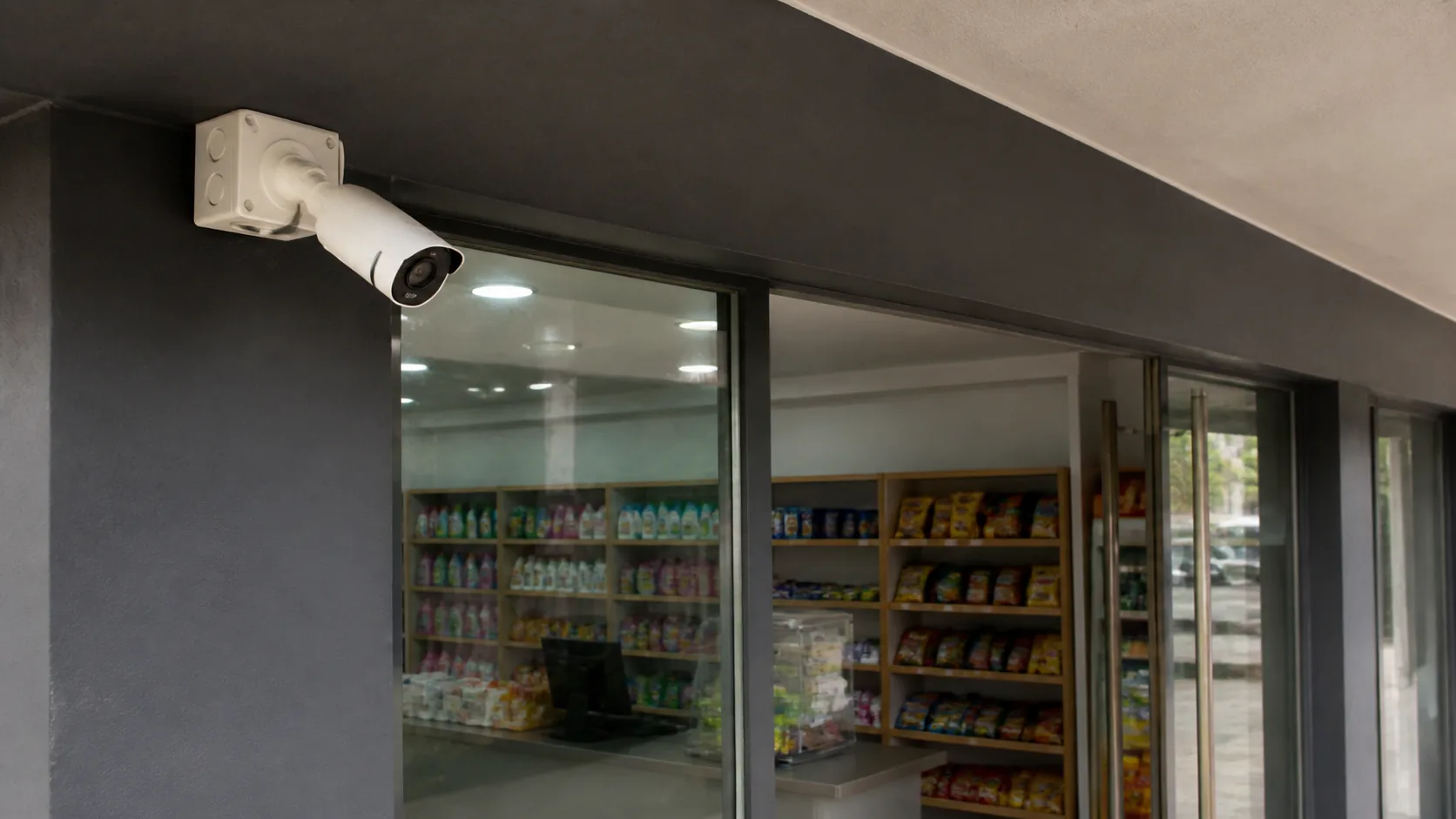
Place cameras for faces and transactions
At entrances, aim for a clear, face-level approach view rather than a very high overhead angle. At a counter, frame the transaction area without placing the lens directly into glare from displays or windows. Test a sample view at the times the site is busiest and darkest.
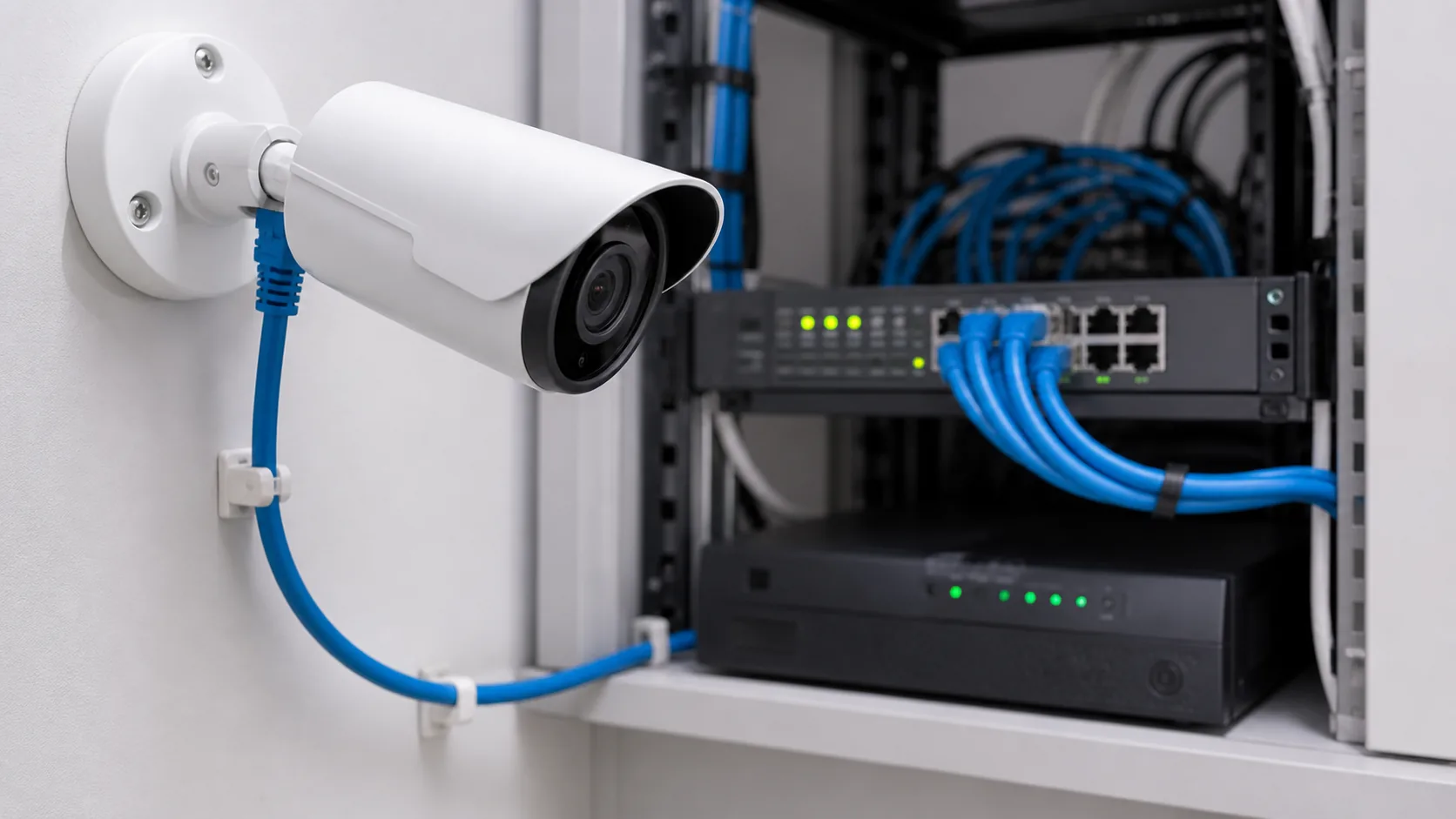
Protect the recorder too
Recording equipment, power protection and network connections should be located where casual access is limited. Remote viewing is useful, but it should not be the only copy of important footage.
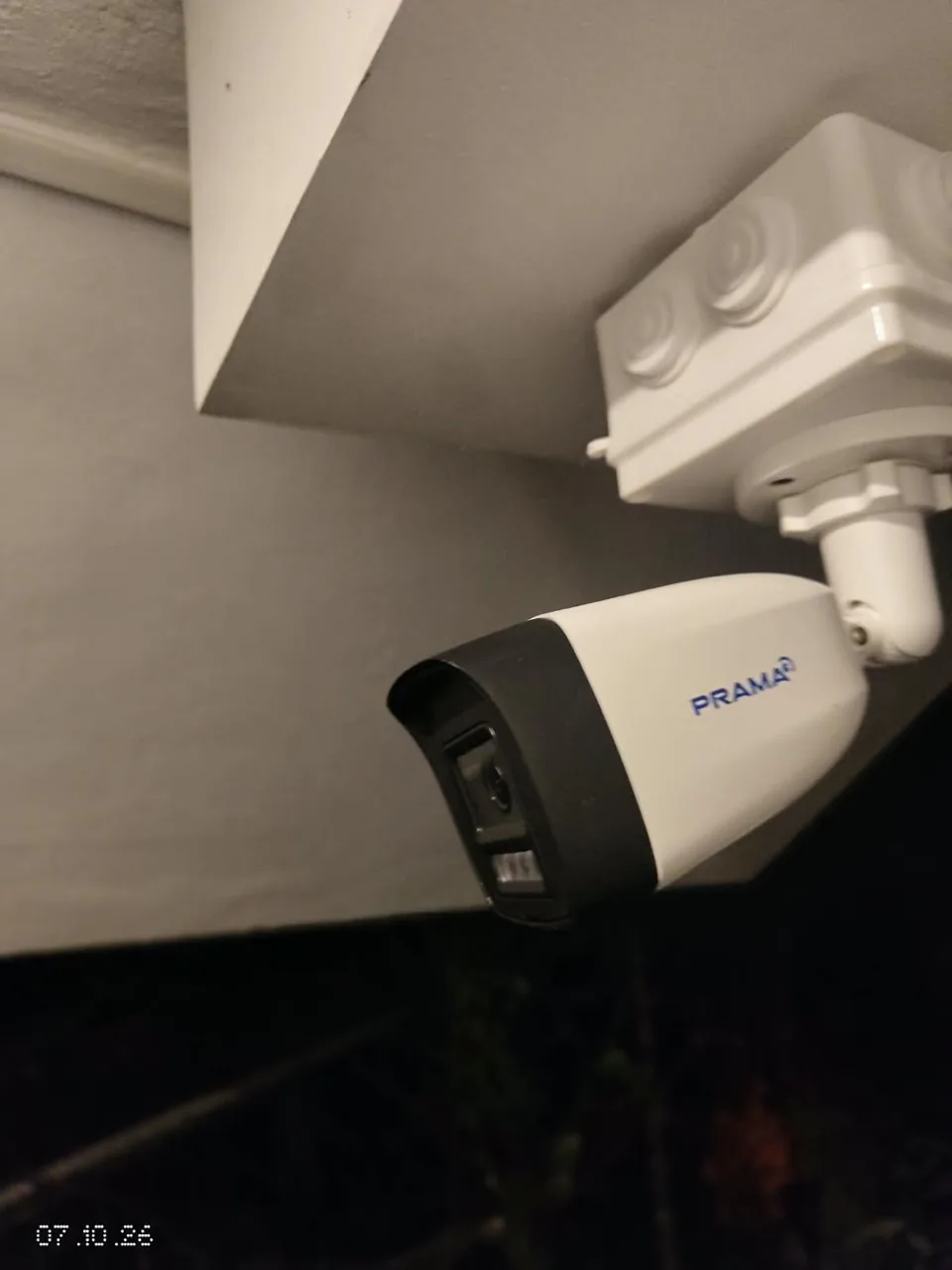
Check lighting, height and cabling routes
Night performance depends on lighting and scene contrast. Avoid aiming a camera directly at bright signs or street lights. Choose mounting heights that discourage tampering while still giving a usable angle for identification.
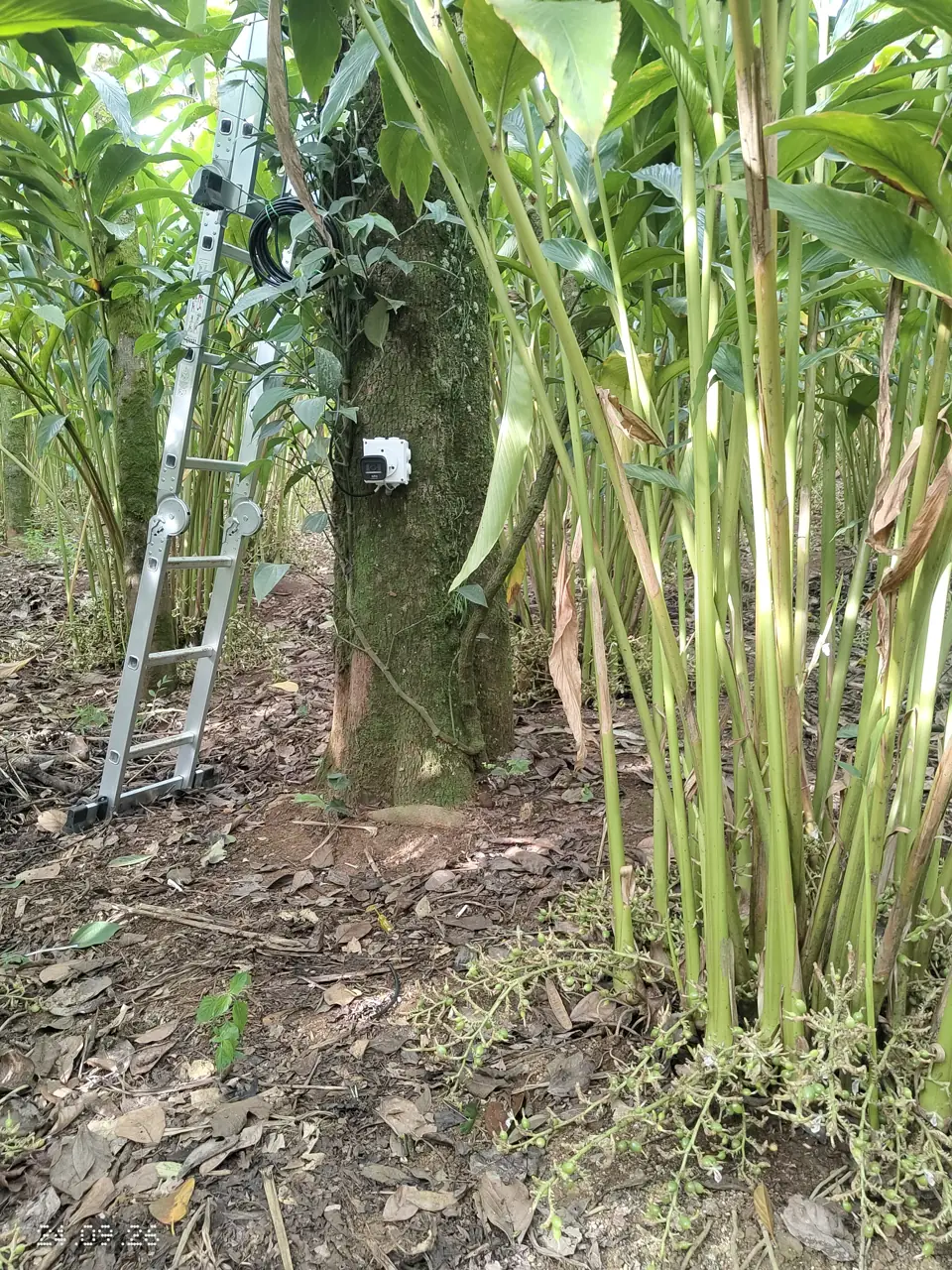
Plan cable routes before finishing walls or ceilings. A clean protected route makes service and expansion easier.
Practical installation tips
- Mark each camera position on a floor plan before installation.
- Check the view in daylight and after dark.
- Keep critical coverage separate from broad overview coverage.
Common mistakes to avoid
- Installing every camera at the highest possible point.
- Ignoring reflections from glass, polished counters or headlights.
- Leaving no allowance for future cable runs or additional channels.
Need professional installation?
Plan the right solution for your site.
Talk to Halo Technologies about planning and installing a solution that suits your space, requirements and future expansion.
Frequently asked questions
How many cameras does a small shop need?
It depends on entrances, the counter, stock handling and any blind spots. A site plan is more useful than choosing a number first.
Can CCTV cameras cover a whole shop from one corner?
A single overview camera can show general activity, but usually cannot provide useful identification across every part of a shop.